Why Wellbeing Belongs at the Center of Leadership — Wellbeing Revolution
Why Wellbeing Belongs at the Center of Leadership
Wellbeing is not a benefit or a program. It is the condition under which good leadership becomes possible — and it belongs at the center of how we build organizations.
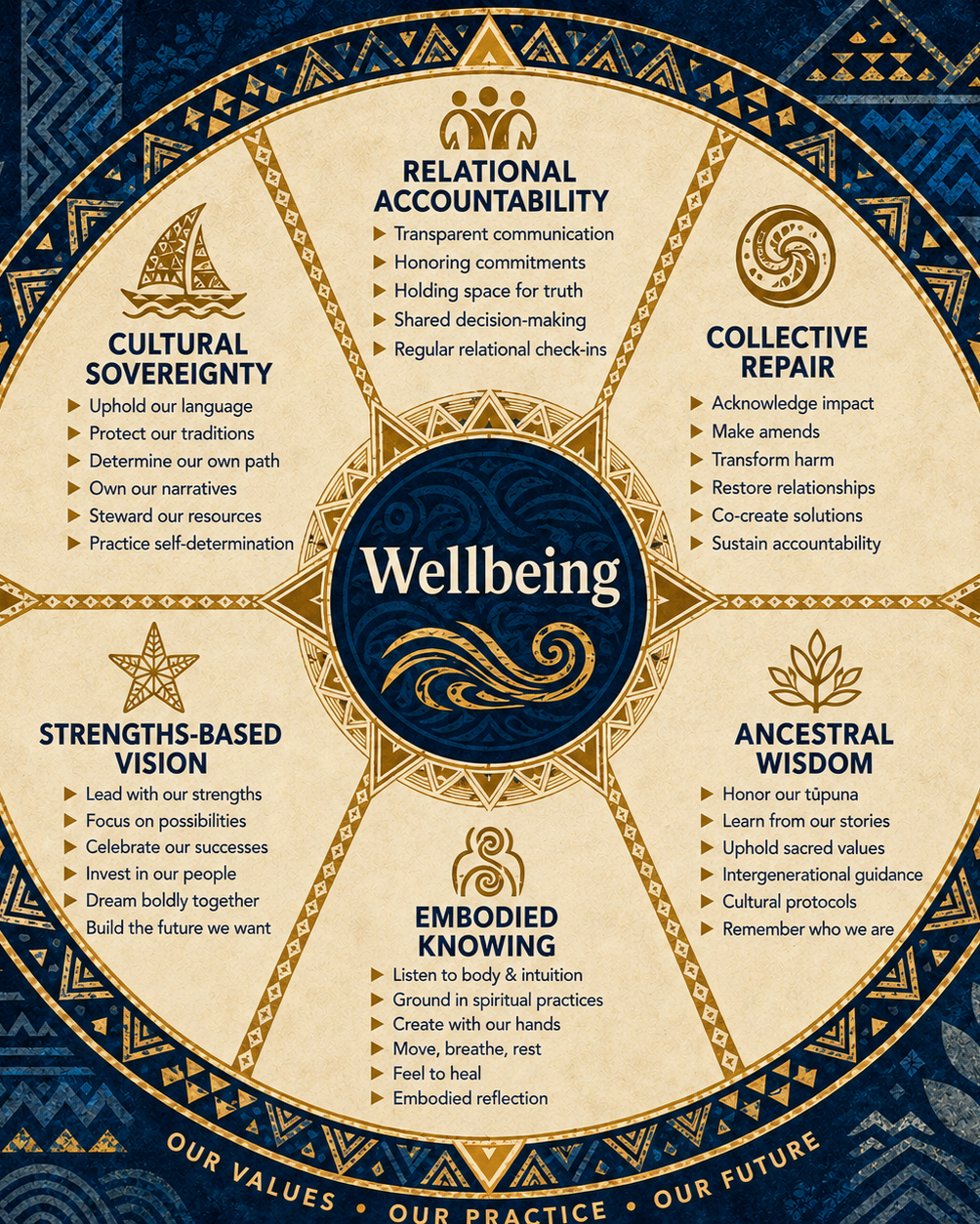
There are hollow definitions of "workplace wellbeing" that might look good on paper but fail to achieve their intended impact.
For example, "Employee Wellness Initiatives" or Employee Assistance Programs" may be well-intentioned, but they rarely change the structural conditions of a workplace beyond a budget line item. Whatever "benefits" people receive from these services are supplementary - they do not always lead to a broader shift in organizational culture, policy or practice. This is why we are proposing a new model of wellbeing-centered infrastructure that can be applied across the homeless response ecosystem.
The Difference Between Wellbeing as a Program and Wellbeing as a Foundation
A program is something you add on. A foundation is something you build from.
When wellbeing is a program, it is the responsibility of HR. It is measured in participation rates and survey scores. It is funded when budgets are healthy and cut when they are not.
When wellbeing is a foundation, it is the responsibility of everyone who holds decision-making power in the organization. It is embedded in how meetings are run, how people are evaluated, how conflict is handled, and how rest is treated. A Wellbeing foundation ensures the work is being tended to with care.
The distinction matters because organizations that treat wellbeing as a program can spend significant resources on it and still have cultures that are quietly — or not so quietly — harming the people inside them.
What Pasifika Wisdom Teaches Us About This
At Wellbeing Revolution, our work is grounded in Pasifika values, and one of the most important of these is the concept of vā — the relational space between people.
Vā is a way of understanding the quality of relationships between people - each holds a thread to form the tapa mat or our infrastructure. When vā is healthy, people can do hard things together. When it is damaged, no amount of strategy or process can compensate.
This is a fundamentally different starting point than most Western organizational frameworks, which tend to treat relationships as a byproduct of good management rather than as the thing management is for.
From this perspective, wellbeing is not about individual resilience or self-care. It is about the health of the relational fabric of the organization — the quality of the vā between leaders and teams, between teams and the communities they serve, between the organization and its own stated values.
Why Leaders Resist This
If wellbeing as a foundation is so clearly better than wellbeing as a program, why do so few organizations actually build it that way?
The honest answer is that it requires leaders to give up something they are often reluctant to give up: the ability to keep the organization's wellbeing separate from their own leadership practices.
A wellbeing program can be delegated. A wellbeing foundation cannot. Effective leaders willingly examine their own behavior, check their tone and communication style, proximity to power, and capacity for accountability — before asking anything of their teams. That is uncomfortable work.
What It Actually Looks Like to Center Wellbeing
Centering wellbeing in leadership is not about making everything softer or slower. It is about making the organization more honest.
It looks like building recovery time into project cycles, not as a reward for completion but as a structural commitment to sustainable pace. It looks like creating decision-making processes that include the people most affected by those decisions — not as a consultation exercise, but as a genuine redistribution of power. It looks like leaders who can say "I got that wrong" without it becoming a crisis of authority.
It looks like asking, regularly and seriously: Who is this system designed to serve? Who does it leave out? What would it look like if it worked for everyone?
These are not soft questions, but they are ones we need to sit with — not because it is comfortable but because the alternative is an organization that slowly hollows itself out.
The Business Case Is Real, But It Is Not the Point
There is a growing body of research showing that organizations with strong wellbeing cultures have lower turnover, higher engagement, better decision-making, and more innovation.
But we want to be honest about something: Wellbeing Revolution (WBR) does not center wellbeing because it is good for the bottom line. We center it because we believe it drives meaningful action toward transformative justice. The business outcomes are real, and they matter — but they are a result of doing the right thing.
This distinction is not semantic. Organizations that center wellbeing because it improves metrics will abandon it when the metrics shift. Organizations that center it because they believe people deserve to be treated with dignity will build it into the bones of how they operate — and it will hold.
Where to Start
If you are a leader who wants to move in this direction, the most important first step is not a program or a policy. It is a question.
Ask yourself: What would it look like if the people I work with were genuinely thriving — not just performing, not just coping, but actually flourishing?
And then ask: What would I need to change about how I lead for that to be possible?
Those two questions, taken seriously, are the beginning of the revolution.
If you want to go deeper — to explore what this looks like in practice for your organization — the work starts here.